
Virtual Tour of Almansa Castle
A way to bring heritage closer to more people and expand its reach without physical limitations.
The Almansa Castle virtual tour allows visitors to explore its historic spaces interactively, enabling remote visits and enhancing heritage promotion. Beyond its tourism value, these types of virtual environments help bring historical sites closer to more people, improve accessibility, and expand the reach of cultural institutions.
A tool for heritage promotion and accessibility
Virtual tours enable municipalities and cultural institutions to present their spaces in an accessible, scalable, and engaging way, helping promote heritage while reducing dependence on physical visits.
Would you like to digitise a space like this?
This Almansa Castle virtual tour is a real example of how heritage can be transformed into an accessible, interactive experience available from any device.
The Project: Almansa Castle Virtual Tour
In collaboration with Almansa City Council, we created this virtual reality project consisting of an accurate digital replica of the iconic 13th-century Almansa Castle. The main objective of this project is to provide inclusive access to one of the region’s most emblematic historical landmarks.
Key Features
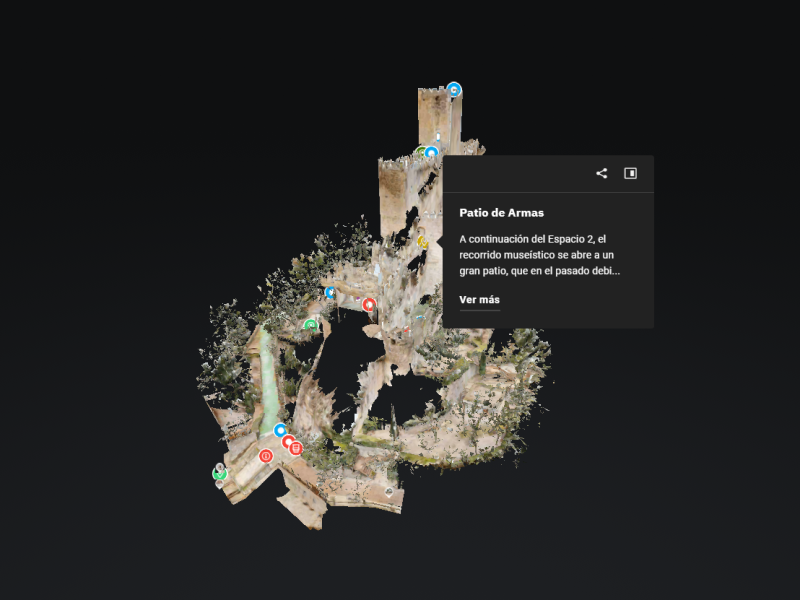
Using state-of-the-art 3D capture cameras, we scanned every centimetre of Almansa Castle. This meticulous scanning process allowed us to digitally recreate the castle with an unprecedented level of detail, capturing even the most subtle aspects of its architecture and surroundings.
Using state-of-the-art 3D cameras, we scanned every centimetre of Almansa Castle, covering an area of 3,000 square metres. This highly accurate digital replica captures subtle architectural and environmental details, enabling an immersive virtual exploration of the castle.
The project focuses on accessibility, allowing people with reduced mobility, vertigo, or heart conditions to explore the castle without physical limitations. This ensures that everyone can enjoy and learn about this cultural landmark.
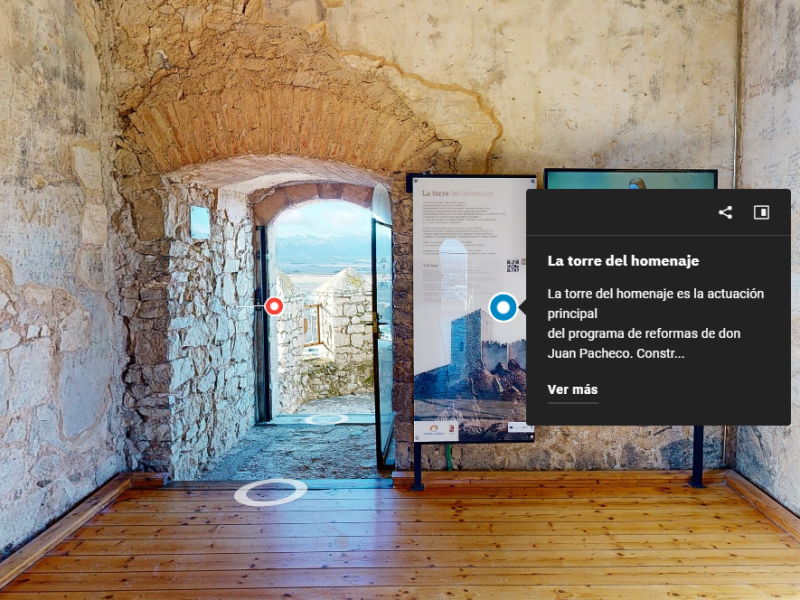
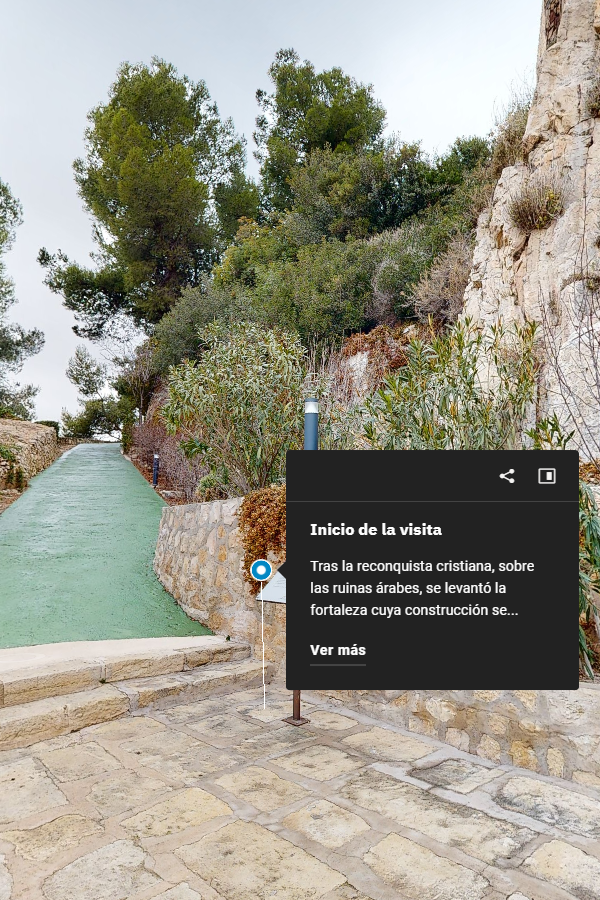
The virtual tour offers an interactive experience, allowing users to explore specific areas of the castle and access detailed information about its history and architecture. Interactive elements such as virtual guides and points of interest enhance the learning experience.
The virtual tour can be regularly updated with new content, special events, and temporary exhibitions, keeping the experience fresh and engaging for returning visitors.
Challenges
Enable people with reduced mobility to access and explore Almansa Castle, overcoming physical barriers such as steep staircases and uneven levels that can make an in-person visit challenging.
Enable people who experience vertigo or heart-related conditions to explore the castle more comfortably, overcoming the challenges of navigating its complex physical structure.
Minimise the wear and deterioration of the castle caused by physical visitor traffic, ensuring its long-term preservation and protection.
Make Almansa Castle accessible to a wider and more diverse audience, including people from different regions and countries who are unable to visit it physically.
Provide an effective educational tool that allows students and history enthusiasts to explore the castle and learn about its historical and cultural significance in a detailed and interactive way.
Create an interactive and engaging virtual experience that keeps visitors interested, allowing them to explore Almansa Castle and access detailed information about its history in a dynamic way.
Ensure that the virtual tour is compatible with different devices, including smartphones, computers, and virtual reality headsets, providing an accessible experience for users of all levels of technological ability.
Achievements
Through this virtualisation project, Almansa City Council has expanded access to this remarkable historical landmark, allowing a wider audience to experience its cultural heritage. This initiative represents a significant step towards greater inclusion and equal access to historical sites.
The project aims to inspire other organisations to embrace digital solutions that promote universal accessibility while raising awareness of the role technology can play in preserving and sharing historical heritage.
This initiative represents a significant step towards inclusion, ensuring that people of all abilities can enjoy and learn about this important historical landmark.
People affected by vertigo or heart-related conditions can now explore the castle virtually, including the stone-carved spiral staircase leading to the top of the keep tower, overcoming the physical challenges that may limit in-person visits.
The castle’s digital replica serves as an educational resource for schools and universities, enabling students to explore medieval history and architecture through an interactive and engaging learning experience.
The global reach of the virtual tour can help attract more visitors to the region, supporting the local economy by encouraging physical tourism and increasing engagement with local businesses, including hotels, restaurants, and souvenir shops.
The scanning and digitisation process provides detailed data on the castle’s structure and condition, useful for future restoration projects and academic studies.
Could it be applied to your space?
We analyse your needs and show you how to digitise your heritage through a customised virtual environment designed for your specific requirements.
How can a virtual tour benefit cultural heritage?
Designed for cultural institutions and heritage management
Virtual tours enable municipalities and cultural institutions to present their spaces in an accessible, engaging, and scalable way, supporting heritage promotion while reducing reliance on physical visits.
Can a virtual tour enhance the tourism promotion of your space?
Not every space needs to be digitised, but when the objective is to enhance outreach, accessibility, or tourism promotion, a virtual experience can make a meaningful difference.


